For those who don’t know me, my name is Grace Spencer and I’m about to start Year 12 at Claremont school in Bodiam, East Sussex. I have a condition called RAS Reflex Anoxic Seizures – a disorder of the autonomic system – which is caused by excessive activity of the vagus nerve. (The vagus nerve is the longest of our 12 cranial nerves and is extremely critical to our overall health). In my case, it inhibits the heart and slows it down or temporarily stops it completely.
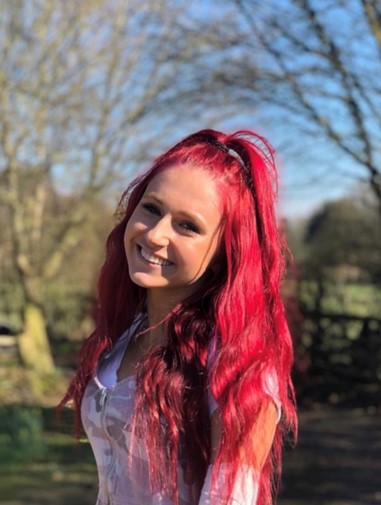
The physical impact of this is immediate as my blood flow stops and I collapse to the floor as if I have fainted. There is no warning and can happen anywhere at anytime. It has impacted mine and my family’s lives completely. It is an all consuming condition which is little known – and impacts each person who has it very differently. I’d like to share my story with you now. It’s been a tough journey and it’s still not over yet. I first fainted on 8th March 2017. It was a terrifying and confusing experience. I went to the GP that evening and was told that it was very normal for teenage girls to faint due to our hormones and that it shouldn’t happen again. I left the doctors surgery feeling less confused and slightly reassured. The next day I fainted again and I continued to faint almost every day after that too. Within a few weeks, I was fainting multiple times a day. Understandably, my parents were desperate and I was terrified. We went back to the GP and said, ‘this can’t be normal – I am surrounded by teenage girls every day and I have never seen any of them faint once!’
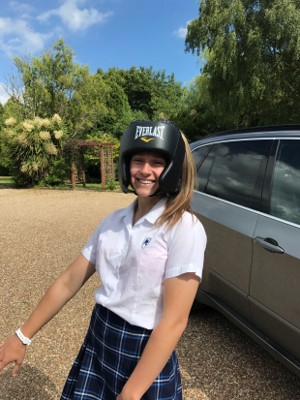
Because I was collapsing anytime and anywhere, mostly without warning, I sustained quite a few head injuries and that was when the school told me I had to wear a helmet. I hated having to wear the helmet; it made me feel really embarrassed, self-conscious and insecure about myself. My parents were desperately trying to figure out what was going on. I had several trips up to London to see cardiologists, neurologists, radiologists, gynaecologists, endocrinologists and more – yet none of them could fix me. I underwent so many tests.
Eventually, the cardiologist told me that some of my faints were genuine vasovagal faints but that the majority were psychogenic blackouts, as a result of stress or anxiety. He told us that in order for me to get better, I would need to have ‘intensive counselling and Cognitive Behavioural Therapy’. So, I started seeing a clinical psychologist at the Priory Hospital in Ticehurst, who wrote down everything I said and made me do exercises that made me feel weird and uncomfortable. My fainting wasn’t improving and I dreaded all of my sessions. I stopped seeing the psychologist after about six months and at around that time, I began seeing a consultant paediatrician at the Conquest Hospital in Hastings who knew exactly what was wrong with me. He told me the reason I was collapsing to the floor was because my blood pressure falls to an unsustainable level – suddenly and mostly without warning. He prescribed a drug called midodrine, to help raise my blood pressure, and it had an impact almost immediately. My fainting drastically decreased from 8 times a day down to 4-6 times a month (which still remains the best it has ever been). After what felt like an eternity, I began to feel normal again.
However, good things don’t always last. I was warned that there may come a time where my body gets too used to the medication. Initially, I was taking one tablet a day but over time, I have had to gradually increase the dosage. I am now taking 7 tablets a day.
During last summer we all agreed to trial a pharmaceutical ‘holiday’ to see if the medication was genuinely needed. I only just started decreasing the medication when it became very clear that I definitely needed the higher dose. I began fainting multiple times a day again and it felt like a massive step backwards.
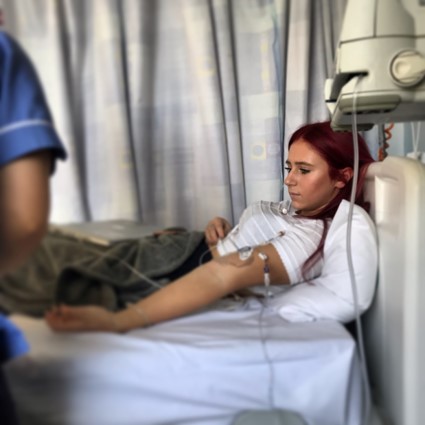
I was put back on the higher dose of midodrine but continued to have terrible headaches and constant severe dizziness. Along with these symptoms I was fainting once a day, every day and it was time to go ‘back to school’. My fainting continued to get worse so I went into hospital for three days in a row to have a two-litre saline infusion each day. The headaches and dizziness completely disappeared! Sadly, it’s not a permanent fix. A couple of weeks later the dizziness returned and I began fainting again. I have subsequently been back to hospital for more saline as right now it seems to be the only thing that helps. Even though my condition of itself isn’t life threatening, it is life changing. Last summer, I fainted off a jetty into the sea. No one saw it happen. Thankfully, within a couple of minutes, my family realised something was wrong. I don’t remember anything apart from waking up in a rescue boat surrounded by people, some familiar and some not at all. I was shaking for hours afterwards and it truly traumatised me. I have never felt so scared in my life.
I haven’t been swimming since that day – the water terrifies me now which is the most upsetting thing as not even a year ago, it was my favourite place to be. If I had been in the water that day for even a few more seconds then I may not have been here speaking to you all today. It wasn’t until that day that I truly appreciated the severity of my illness. Little things that most teenage girls and boys, in fact people of any age, do on a daily basis without thinking twice, I now can’t do because of my condition. I can’t go anywhere by myself; I’m not allowed to catch a train on my own in case I faint off the platform, I won’t be able to learn to drive when I turn 17 and I definitely won’t be returning to the water any time soon. And on top of everything, I am currently blind in my right eye due to a particularly bad faint last summer. I don’t know if my eye sight will ever come back. In fact, I don’t know if I will ever get better and stop fainting completely. At the same time that all of this has been going on, I have had my fair share of friendship issues and relationship challenges – normal teenage stuff. Unfortunately, there will always be people who bring you down, who make fun of you or find the need to laugh at a situation that to them means nothing, but to you is your whole life. I know that at school I am referred to as ‘the fainting girl’, ‘the girl who wore the helmet’ or most recently, ‘the girl who looks like a pirate’. I try my hardest to focus on the people who make me happy and who are always there for me no matter what, but sometimes that’s not so easy to do. My condition is not caused by stress or anxiety, but is definitely worsened by it. I know I faint a lot more when I’m going through a difficult time with friends, family, school work or even something completely different that scares or stresses me.
I don’t want other people to suffer as much as I have or to have to go through the same frustrating journey to get a diagnosis, so I’m trying to do something to make a difference. I’d really like to raise money and awareness for STARS, the charitable organisation created to help and support RAS patients like me.
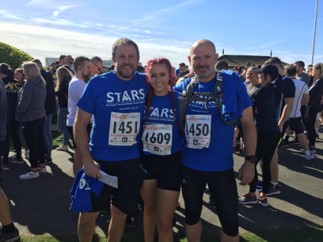
STARS stands for Syncope Trust And Reflex Anoxic Seizures. It started with a few fundraising activities at school and most recently a number of us – pupils, teachers, my Dad and my uncle did the Hastings half marathon. I fainted after the first two miles which caused some interesting reactions from the other runners – but we did go on to finish it (the third mile of which we had a personal paramedic escort which got a few extra cheers!) To date, we have raised over £5,000 through these various events and educated many people along the way. However, this is only the start. The walk, we hope, will go along way to bringing this to an even wider audience – if you all mention this to all your friends and families who have children then this will have been another successful opportunity for me to continue to raise awareness of this condition. I am sure you will hear plenty more from my Dad over the next few months. Thank you for reading my story.